Early Roots in Maui and Honolulu
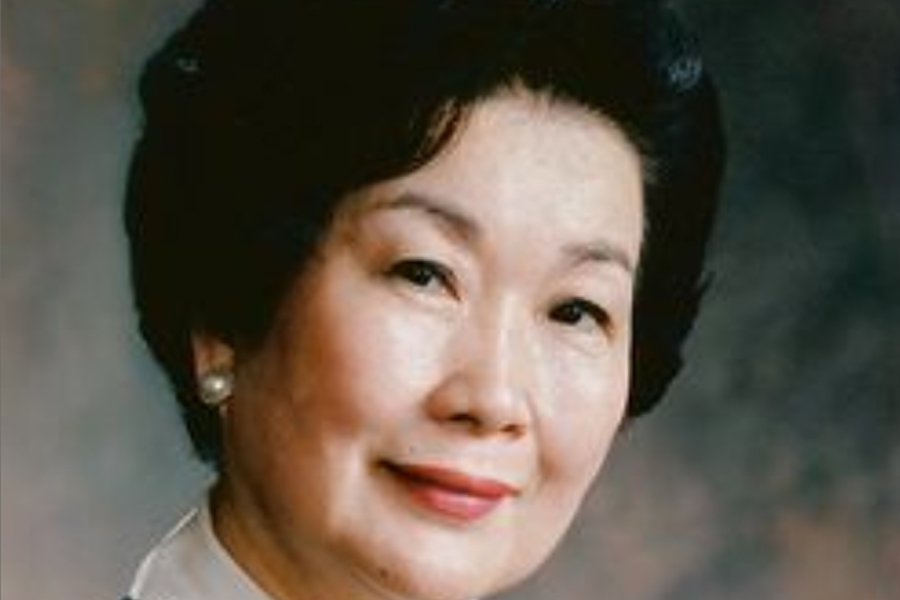
I think of Margaret Shinobu Awamura as someone whose life moved like a steady tide. She was born on June 23, 1924, in Wailuku, Maui, and grew up in Hawaiʻi during a time when family, discipline, and education carried enormous weight. Her story begins not in bright political spotlight, but in the patient world of home, school, and community.
Her parents were Tokuyoshi Awamura and Mitsu Sugiyama Awamura. That detail matters because it places Margaret inside a family story larger than one person alone. Tokuyoshi’s path moved from plantation labor toward Honolulu business life, including work in the jewelry trade. Mitsu came from the Sugiyama family. Together, they raised a household of six daughters, and Margaret stood among them as the second of the six. That alone gives her life shape: not as an isolated figure, but as one bright thread in a close family weave.
Her sisters were Edith Satow, Grace Murakami, Betty Higashino, Shirley Nozoe, and Patricia Tyler. In a family of six daughters, identity is never just individual. It is relational. It is built through shared kitchens, shared burdens, shared memories, and the invisible pressure of being seen by sisters who know your habits before the outside world ever does. Margaret’s life reads like the polished surface of a stone shaped by many hands.
Education and the Making of a Teacher
Roosevelt High School graduated Margaret in 1942. This date is significant because it frames her youth in wartime Hawaiʻi, where youth were accelerated towards adulthood. In 1946, she received a bachelor’s. She later earned a Columbia University counseling master’s. Academically, those are big steps. A woman focused on ascending each rung.
She taught and instructed at the University of Hawaiʻi. Some public records list her as an education or speech instructor. Margaret labored in the classroom, slowly and laboriously shaping minds and voices. Like a lamp flickering behind a window, such labor is quiet but can last generations.
I’m amazed with her career fit. Teaching is architecture. Although you can’t see it, the building holds lives together. Margaret appears to understand. Not only was her family famous politically. Her professional identity was based on knowledge, advice, and discipline.
Marriage to Daniel Inouye
Margaret married Daniel Ken Inouye on June 12, 1949. That marriage linked her life to one of the most important public figures in modern Hawaiʻi and American political history. Daniel Inouye would become a World War II veteran, a Medal of Honor recipient, and a long serving member of Congress. But before the history books, there was a meeting at the University of Hawaiʻi, where Margaret was teaching and Daniel was still a student.
Their relationship began in a world that was still rebuilding itself after war. He had returned from military service with extraordinary pressure on his shoulders. She was building a teaching career and developing her own path. Their meeting reads almost like two currents joining in the same channel. Not sudden, but inevitable once the water finds its course.
Together they had one son, Daniel K. Inouye Jr., who was known in the family as Ken or Kenny. That detail gives the family a very human scale. Public life can inflate a name until it feels monumental, but a child called Kenny brings the story back to something tender and ordinary. A son is a bridge between private life and public memory. Through him, the family line continued in a visible way.
The Awamura Family and the Inouye Family Connection
When I look at Margaret’s story, I see two families meeting at a point of real historical significance. On her side was the Awamura household, shaped by Tokuyoshi, Mitsu, and six daughters. On her husband’s side was the Inouye family, with Daniel becoming one of the defining political figures of the twentieth century. Margaret stood at the center of that crossing.
Her own family members deserve to be named plainly because they form the roots of her life.
Tokuyoshi Awamura was her father. He was a laborer who later moved into Honolulu business life, including the jewelry trade. That arc suggests ambition and resilience. Mitsu Sugiyama Awamura was her mother, and her presence anchors the household in the older generational line from which Margaret came.
Her sisters were Edith Satow, Grace Murakami, Betty Higashino, Shirley Nozoe, and Patricia Tyler. Their names matter because a family is not just a list, it is a constellation. Each sister would have carried her own life, but together they formed the atmosphere in which Margaret matured.
Her husband was Daniel Ken Inouye. Through him, Margaret entered the historical record in a more public way, but she was never only a supporting figure. She was a spouse, a teacher, an adviser, and a mother. That combination is more powerful than many titles. It suggests a life of layered responsibility.
Her son was Daniel K. Inouye Jr., also called Ken or Kenny. He appears in public references tied to his father and in later cultural mentions. He is the clearest continuation of Margaret’s immediate family line.
Career, Civic Presence, and Public Memory
Margaret’s work seemed to center on education, yet she was active outside of class. Many say she advised Daniel Inouye without glasses during the campaign. That detail interests me. It implies strength without performance and influence without noise.
In 2004, she co-sponsored the restart of the NOAA research ship Hiʻialakai with oceanographer Isabella Abbott. Her participation demonstrates her regard in Hawaiʻi’s civic and cultural circles. She was not ornamental. She was part of the state’s narrative.
She died at 81 in Rockville, Maryland, on March 13, 2006. Her life had previously included education, family, and public memory. She witnessed the transition from territorial to contemporary Hawaiʻi, from wartime to her husband’s mature political career.
Why Her Story Still Matters
I think Margaret Shinobu Awamura matters because she reminds me that history is often carried by people who do not demand the spotlight. Some lives blaze. Others steady the room. Margaret seems to have done both, in her own quiet way. She built a teaching career, raised a son, stood beside a towering political figure, and remained connected to her family roots. That is not a small life. That is a life with structure, grit, and grace.
Her story is also a reminder that family history can be as revealing as public history. The names of her parents and sisters, the path of her husband, and the future carried by her son all help define who she was. She stands inside a chain of relationships, and that chain is part of her strength. Like coral growing slowly under clear water, her influence took shape over time, then held firm.
FAQ
Who was Margaret Shinobu Awamura?
Margaret Shinobu Awamura was a Hawaiian educator and the wife of Daniel K. Inouye. She was born in 1924 in Wailuku, Maui, educated in Hawaiʻi and later at Columbia University, and worked as an instructor at the University of Hawaiʻi.
Who were Margaret Shinobu Awamura’s family members?
Her parents were Tokuyoshi Awamura and Mitsu Sugiyama Awamura. Her sisters were Edith Satow, Grace Murakami, Betty Higashino, Shirley Nozoe, and Patricia Tyler. Her husband was Daniel Ken Inouye, and her son was Daniel K. Inouye Jr., also known as Ken or Kenny.
What was Margaret Shinobu Awamura’s career?
She worked in education, including teaching at the University of Hawaiʻi. Public references describe her as an instructor in education and speech, and she was also involved in civic and campaign life through her husband’s career.
When did Margaret Shinobu Awamura marry Daniel Inouye?
She married Daniel Ken Inouye on June 12, 1949.
Did Margaret Shinobu Awamura have children?
Yes. Public records identify one son, Daniel K. Inouye Jr., who was called Ken or Kenny.
Why is Margaret Shinobu Awamura remembered today?
She is remembered as an educator, a family matriarch, and a significant presence beside Daniel Inouye. Her life links family history, education, and Hawaiʻi’s public legacy in one lasting thread.