A Mitford Sister in a Different Key
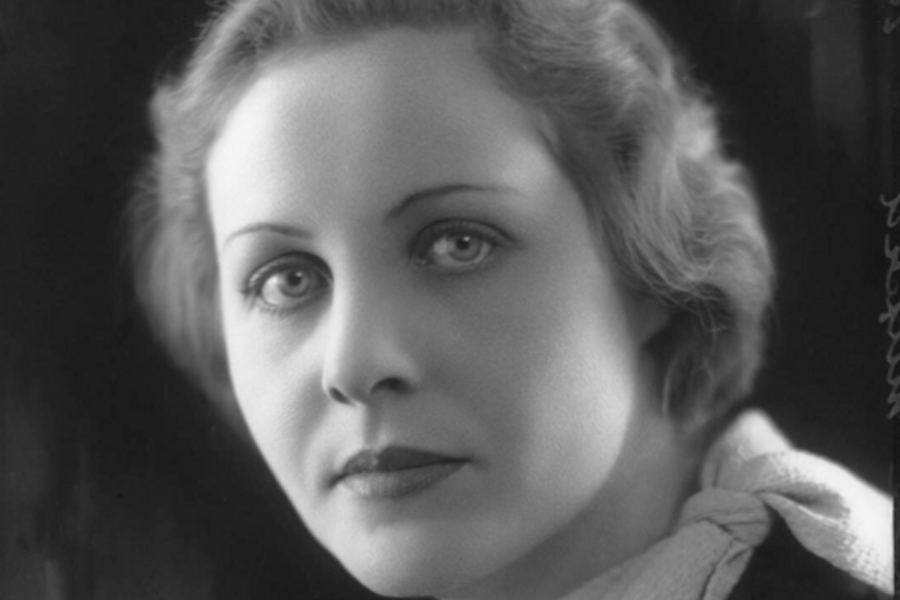
I think of Pamela Mitford as the sister who moved through the Mitford story like a calm field after a storm. While her siblings often lit up newspapers, arguments, and scandals, Pamela preferred earth under her nails, animals at her feet, and the plain logic of daily work. She was born Pamela Freeman-Mitford on 25 November 1907 and lived until 12 April 1994. Her life was not built around speeches or headlines. It was built around land, family, marriage, farm work, and the stubborn dignity of privacy.
She belonged to one of the most famous families of the 20th century, yet she never seemed to need fame for oxygen. That makes her fascinating. She was a Mitford, yes, but she was also something rarer: a woman who seemed to resist the family’s centrifugal pull toward spectacle. I see her as the family’s steadying beam, the one that held while everyone else shone, clashed, or fractured.
The Mitford House and the Web of Family
Pamela was the daughter of David Freeman-Mitford, 2nd Baron Redesdale, and Sydney Bowles. Her father came from an aristocratic line with military and landowning roots. Her mother came from the Bowles family, with connections to publishing and public life. The result was a household full of rank, wit, tension, and strong opinions.
Pamela had six siblings, and each one carved out a different shape in history.
Nancy Mitford, the eldest sister, became a novelist with a sharp eye and a sharper tongue. She turned society into literature and wrote with a blade hidden in silk. Thomas, usually called Tom, was the only brother. He served in the war and died in Burma in 1945, a loss that shadowed the family deeply. Diana Mitford married Bryan Guinness, then Oswald Mosley, and became one of the most controversial women in Britain because of her political associations. Unity Mitford became infamous for her devotion to Hitler, a fixation that still stains the family legend like smoke on a white wall. Jessica Mitford, often called Decca, went in the opposite direction and became a writer and campaigner with a radical political voice. Deborah Mitford became the Duchess of Devonshire and later became known for transforming Chatsworth into a living, working house rather than a museum in amber.
Pamela stood among them like a hedgerow among fireworks. She was not dull. She was durable. That is different.
The family relationships mattered enormously in her life. She was close to several sisters in different ways, especially when the family faced illness, divorce, death, or scandal. The Mitford household was never emotionally simple. It was a chessboard with portraits on the wall. Yet Pamela often provided the practical human glue. She was the sister who could be trusted to stay calm when others were burning brightly or badly.
Marriage, Home, and the Shape of Her Private Life
Derek Jackson married Pamela 1936. Physicist and amateur equestrian, he was smart and stylish. Their 1951 divorce ended their marriage. Despite not having children, she was deeply involved in family and housework. She never lived by public reinvention. So she constructed one around continuity.
A striking feature of Pamela’s story is how much happened in private. She lived in the country, managed property, cared for animals, and made herself useful in ways that are frequently overlooked yet are essential to life. She maintained a dairy farm in Biddesden for years. I care about that information because it reveals her temperament. Farm management isn’t fun. Patience, weather, scheduling, judgment, and muscle memory are needed. A seasonal chat.
Pamela resided with Italian horsewoman Giuditta Tommasi after her divorce. Pamela’s final years were shaped by their friendship. Like most of Pamela’s life, the relationship was long and essential but understated.
What Pamela Did, and Why It Matters
Pamela did not have a conventional public career, and that absence is itself revealing. She was not a politician, author, activist, or business figure in the way some of her siblings or relatives became. Her achievements were practical and intimate. She worked with farms, livestock, household management, and country life. She learned to handle tasks that require quiet competence rather than applause.
I find that kind of achievement easy to overlook if I look only for titles or publications. But Pamela’s life suggests a different scale of value. She understood how to keep a place functioning. She understood animals, food, land, and the daily choreography of a country household. She became known for cooking, gardening, poultry-keeping, and a grounded rural skill set. One of the more colorful stories attached to her is the idea that she helped introduce rare chicken breeds into Britain after bringing eggs through customs in a chocolate box. Whether told with complete precision or family embellishment, the story suits her. It sounds like something Pamela would do, practical and a little sly.
Her financial life also seems tied to this world of estates and domestic stewardship rather than professional wealth. The Mitfords were aristocratic, but aristocracy does not always equal abundance. Their lives were often shaped by property, inheritance, maintenance costs, and family obligations. Pamela’s role was less about generating money than about making inherited life work in the real world.
A Timeline of a Life That Refused to Shout
Pamela was born in 1907, before WWI. In the late 1920s, she was betrothed to Oliver Watney, but they never married. She married Derek Jackson in the 1930s and lived a rural life with animals and property.
Her marriage began in 1936. Pamela and Derek relocated to Tullamaine Castle in Ireland in 1947, another indicator that her life was moving toward space, horses, and rural air. The 1951 divorce ended the marriage. Later decades provided companionship, tranquility, and a life characterized by choice rather than inheritance.
She died in 1994, leaving a paradigm of stubbornness and well-being without becoming a performance.
Pamela Among the Mitfords
When I place Pamela beside the rest of the Mitford family, the contrast is almost musical. Nancy was a violin note, bright and pointed. Diana was a brass fanfare, impossible to ignore. Unity was a flare. Jessica was a drumbeat of protest. Deborah was a stately chord. Tom was the missing bass line, cut short too soon. Pamela was the quiet rhythm underneath.
That does not make her less important. It makes her essential in a different way. Families like the Mitfords are often remembered for their drama, but drama cannot float without structure. Pamela gave the family a link to ordinary life, and ordinary life is where character proves itself.
Family Members at a Glance
| Family Member | Relationship to Pamela | What They Were Known For |
|---|---|---|
| David Freeman-Mitford, 2nd Baron Redesdale | Father | Aristocrat, landowner, military background |
| Sydney Bowles | Mother | Matriarch of the Mitford household |
| Nancy Mitford | Sister | Novelist and social satirist |
| Thomas “Tom” Mitford | Brother | Soldier, died in Burma in 1945 |
| Diana Mitford | Sister | Society figure, political controversy |
| Unity Mitford | Sister | Notorious Hitler admirer |
| Jessica Mitford | Sister | Writer and activist |
| Deborah Mitford | Sister | Duchess of Devonshire, Chatsworth steward |
| Derek Jackson | Husband | Physicist and amateur jockey |
| Giuditta Tommasi | Long-term companion | Italian horsewoman |
FAQ
Was Pamela Mitford the most famous Mitford sister?
No, she was not the most famous, but she may be the most underestimated. Her life was quieter than Nancy’s, Diana’s, or Jessica’s, yet that quiet was deliberate and strong.
Did Pamela Mitford have children?
No, she did not have children with Derek Jackson. Her life remained centered on family, property, and later companionship rather than motherhood.
What was Pamela Mitford known for?
She was known for her rural life, practical skill, dairy farming, poultry-keeping, cooking, and her reputation as the family’s most grounded sister.
Was Pamela Mitford involved in politics?
Not in any major public sense. Unlike some of her siblings, she did not become known for political activity or public controversy.
Why does Pamela Mitford still matter?
She matters because she shows another way to belong to a famous family. She was not built for spectacle. She was built for steadiness, and that kind of life is easy to miss until you realize how much it holds up around it.