A child of Victorian fame and private sorrow
Arthur Alleyne Kingsley Doyle represents brightness and brevity. He was born into one of Britain’s most famous literary families in South Norwood, Croydon, on November 15, 1892. His mother was Louisa Hawkins Doyle, a sick woman who endured, and his father was Sherlock Holmes creator Sir Arthur Conan Doyle. Kingsley landed to a glittering home with the normal family dynamics, amplified by public attention.
He was Arthur Conan Doyle and Louisa Hawkins’ second child. Mary Louise Doyle, born 1889, was his older sister. Kingsley is often called Kingsley in family records and later references, a name that sounds like a bright young limb on an ancient tree. In his family, brilliance, ambition, and loss were close. His father’s literary success cast a long and fluctuating shadow over the family table.
Kingsley’s childhood followed a pattern common to his peers. He attended Sandroyd School in 1903, Eton College in 1906, and St. Mary’s Hospital School in London in 1911. That last stage signals a major medical shift. I saw that detail as purposeful. He didn’t drift. He built a life. History sliced through it like a wire.
The family circle around Kingsley Doyle
Kingsley’s family is small on paper, but each name matters.
His father, Sir Arthur Conan Doyle (1859 to 1930), was already one of the most important writers of his age. He was also a trained physician, a public thinker, and a man who kept reinventing himself. The elder Doyle’s energy was volcanic. He wrote, campaigned, travelled, and argued. For a son, that must have been both inspiring and difficult. To be the child of such a man is to stand near a lighthouse that never stops turning. You are illuminated, but never entirely in your own light.
His mother, Louisa Hawkins Doyle (1857 to 1906), known in family life as Touie, was quieter in the historical record, but no less important. She was the stabilizing center in the earliest household. Her death in 1906 came when Kingsley was still young. That loss marked the family deeply. A mother’s absence is not a line in a genealogy. It is a room left empty, the kind that changes the shape of every later memory.
His sister, Mary Louise Doyle (1889 to 1976), was his only full sibling. She and Kingsley were the children of Arthur and Louisa together, and they shared the first home, the first family language, the first map of belonging. Mary lived long enough to see a very different century unfold, while Kingsley’s life ended before he reached 26. That contrast gives the sibling bond a fragile, haunting edge. One life stretched out like a river. The other burned like a flare.
Kingsley later became part of a larger blended family circle, because Arthur Conan Doyle remarried after Louisa’s death. Even so, the clearest family relationship for Kingsley remains the original four person unit: father, mother, sister, and himself. That core shape is the one that most defines his place in history.
Education, training, and early direction
Kingsley’s schooling suggests that he was being prepared for a serious professional path. Sandroyd School and Eton College were both elite institutions, and his later enrollment at St Mary’s Hospital School indicates medical ambition. I see this as important because it shows he was not simply “the son of Arthur Conan Doyle.” He was a young man developing his own direction.
He was born into a world where identity often arrived prewritten, but his education hints at an attempt to author a different page. Medicine carries its own moral weight. It is practical, disciplined, and intimate. A doctor does not merely observe life. He steps into it, hands first.
The outbreak of the First World War changed that course. Like many young men of his generation, Kingsley was pulled from study into service. His life, which might have moved toward hospital wards and civilian medicine, instead entered the mud, smoke, and iron of war.
Military service and final days
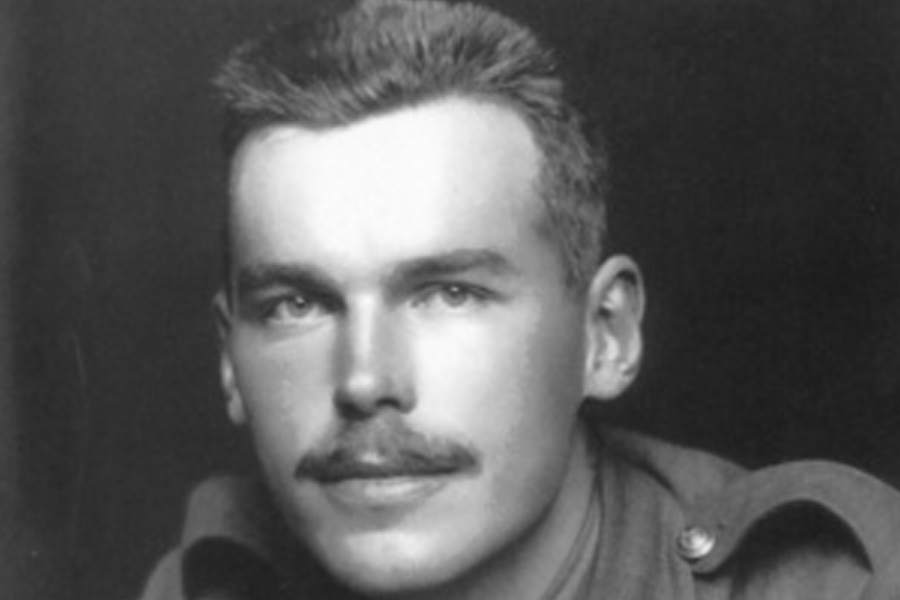
Kingsley served during the First World War. He is remembered in connection with the 1st Hampshires, where he rose to the rank of acting captain. That is no small detail. It suggests responsibility, leadership, and the confidence of those around him. He was also badly wounded on the Somme, one of the most brutal theaters of the war. The Somme was not simply a battle. It was a grinding machine for youth.
He died on 28 October 1918 at St Thomas’s Hospital in London, just weeks before the war ended. His cause of death was pneumonia, and he was only 25 years old. His burial at St Luke’s Church, Grayshott returns the story to a quieter scale, as if the final chapter had to be written in a village churchyard after all the noise of empire and war.
There is something especially moving about a life that reaches its end just before a larger conflict closes. It is like a candle going out while dawn is already gathering at the window. Kingsley did not live to see the peace his generation had paid for.
A compact timeline of a short life
| Date | Event |
|---|---|
| 15 November 1892 | Born in South Norwood, Croydon |
| 1903 | Attended Sandroyd School |
| 1906 | Began at Eton College |
| 1911 | Studied at St Mary’s Hospital School in London |
| 1914 to 1918 | Served in the First World War |
| Somme period | Badly wounded in action |
| 28 October 1918 | Died of pneumonia in London |
| After death | Buried at St Luke’s Church, Grayshott |
Why Kingsley Doyle still matters
Kingsley Doyle explains how history handles renowned children, which is important. Their names are kept, but their lives may be forgotten until someone looks. His record shows a young guy with schooling, medical training, military duty, family loss, and promise. He was not a celebrity’s ornament. Son, brother, student, soldier, and war casualty.
His story broadens Arthur Conan Doyle’s image. People remember the father as an author, public speaker, and developer of creative fictitious brains. Family history offers additional layer. It depicts affection, loss, and time’s deep cost. Father would have mourned Kingsley’s death as the breakdown of a planned future.
FAQ
Who was Arthur Alleyne Kingsley Doyle?
Arthur Alleyne Kingsley Doyle was the second child of Sir Arthur Conan Doyle and Louisa Hawkins Doyle. He was born in 1892, studied at several notable schools, served in the First World War, and died in 1918 at the age of 25.
Who were Kingsley Doyle’s family members?
His immediate family was his father, Sir Arthur Conan Doyle; his mother, Louisa Hawkins Doyle; and his sister, Mary Louise Doyle. These are the central family members most clearly linked to his own life story.
Did Arthur Alleyne Kingsley Doyle have siblings?
Yes. He had one full sibling, Mary Louise Doyle, who was older than him and lived until 1976.
What was Kingsley Doyle’s education?
He attended Sandroyd School, then Eton College, and later St Mary’s Hospital School in London. His education suggests that he was preparing for a medical career before the war intervened.
What happened to him during the First World War?
He served in the British Army, was associated with the 1st Hampshires, reached the rank of acting captain, and was badly wounded on the Somme.
How did Arthur Alleyne Kingsley Doyle die?
He died of pneumonia on 28 October 1918 in London, shortly before the end of the First World War.
Where is he buried?
He was buried at St Luke’s Church, Grayshott.
Why is he remembered today?
He is remembered as part of the Conan Doyle family and as a young man whose life combined education, wartime service, and early death. His story adds a human scale to a family often viewed only through the fame of Arthur Conan Doyle.