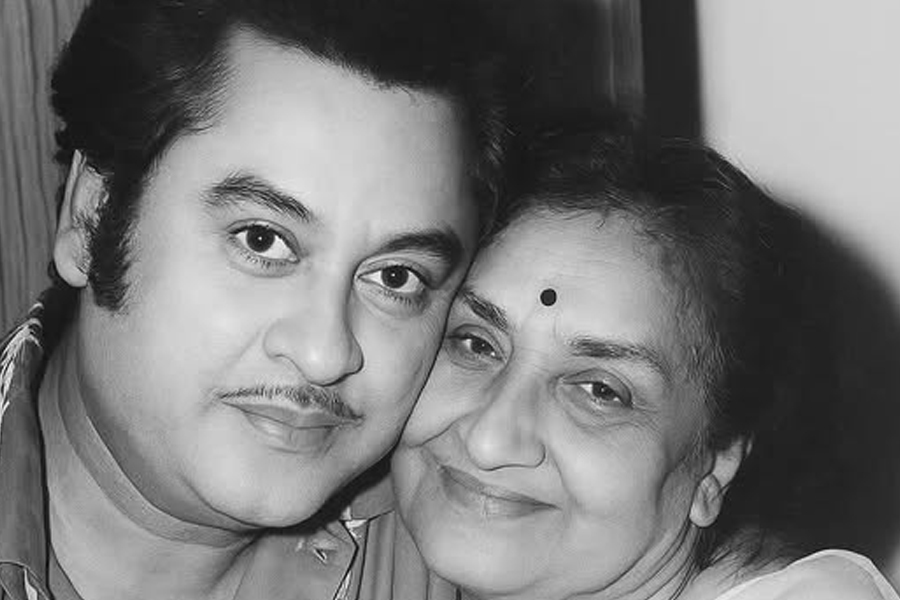
A Quiet Matriarch at the Center of a Famous Lineage
I perceive Sati Rani Devi as a lady who lived at the intersection of cinema, family, ritual, and memory. Her name may not be as well-known as her brothers’ or children’s, but she established one of India’s most unique family networks. Her family, the Mukherjee Ganguly, is more like a river, passing down skill, history, and renown.
Sati Rani Devi, sister of Ashok, Anoop, and Kishore Kumar, is famous. She married filmmaker and studio owner Sashadhar Mukherjee. She became the mother of a Mukherjee family that included actors, producers, directors, and future prominent people through that marriage. Her life encompasses a family that shaped Indian popular culture and a private, home center.
Family Roots and Early Identity
I find it striking that public memory often speaks of Sati Rani Devi through her relationships, yet those relationships form a map of influence. She was born into the Ganguly family, with Kunjalal Ganguly and Gouri Devi as her parents. Her brothers would become household names. Ashok Kumar became one of Indian cinema’s earliest giants. Anoop Kumar and Kishore Kumar followed their own paths, with Kishore’s voice eventually becoming a gold standard in playback singing. In many ways, her sibling circle was like a constellation, and she sat among stars that still shine in cultural history.
Her family background is often described as Bengali and rooted in a respected social setting. That matters, because it helps explain the blend of discipline, legacy, and cultural seriousness that appears again and again in the family stories attached to her name. She was not simply adjacent to fame. She was part of the household from which fame spread outward like sparks from a fire.
Marriage to Sashadhar Mukherjee
Sati Rani Devi’s marriage to Sashadhar Mukherjee linked two powerful family currents. Sashadhar Mukherjee was associated with Filmalaya Studios and with the film business in a direct, structural way. Their union created one of the most important bridges between cinema families in Mumbai. It also became the foundation for a lineage that would remain visible for decades.
The marriage produced children who would each add to the family’s public footprint. Their sons included Joy Mukherjee, Deb Mukherjee, Shomu Mukherjee, and others who appear in family records and public mentions under names such as Rono, Shubir or Subbir, and Shibani Maulik Mukherjee. Different sources and family references sometimes vary in spelling, but the family circle is clear. It is a large, layered branch, and Sati Rani Devi sits at its root.
I think of her role here as that of a seam holding two richly patterned fabrics together. One fabric came from the Ganguly side, with the Kumar brothers at its bright edge. The other came from the Mukherjee side, with film production, cultural influence, and a widening public profile. She helped join them into one enduring family tapestry.
Her Children and Their Public Paths
The children of Sati Rani Devi became important in their own right. Joy Mukherjee became a known actor. Deb Mukherjee became part of the family’s public artistic presence. Shomu Mukherjee became a filmmaker and a key link to the next generation, including Kajol and Tanishaa Mukerji. The family tree continued to spread like branches after rain.
Joy Mukherjee’s line includes grandchildren such as Simran and others associated with family mentions. Deb Mukherjee’s line includes Sunita Gowariker and Ayan Mukerji, both names that appear in later family discussions. Shomu Mukherjee’s line includes Kajol and Tanishaa Mukerji, who are among the most visible modern members of the family. Through them, Sati Rani Devi’s legacy moved from black and white memories into contemporary screens, interviews, and public events.
I also note an important correction that appears in the family record. Tanishaa Mukerji and Ayan Mukerji are grandchildren, not great-grandchildren. Yug Devgan, Konark Gowariker, and Vishwang Gowariker appear in the next generation as great-grandchildren in the public family structure. These details matter because family histories can blur at the edges, but the shape of the tree remains strong.
A Life Beyond the Spotlight
Sati Rani Devi’s lack of a public profession makes her intriguing. No major interviews, business disclosures, or film credits involve her. Her significance derives from family, history, and continuance. That influence is easy to underestimate. It is quieter than applause but occasionally lasts longer.
North Bombay Sarbojanin Durga Puja in Juhu is closely associated with her and Sashadhar Mukherjee. One of Mumbai’s most famous family-driven Durga Pujas. It became a religious and cultural monument as generations of the family preserved it. This is one of her greatest legacies. It goes beyond ritual. This bequest gets replenished annually like a lamp in a familiar room.
The puja illustrates how family memories becomes public culture. A domestic project became a communal event. This extended Sati Rani Devi’s influence beyond the home into city life.
Sati Rani Devi in the Larger Family Story
The Mukherjee and Ganguly families are often discussed together because so many of their members became public figures. Ashok Kumar, Anoop Kumar, and Kishore Kumar gave the Ganguly side immense recognition. Sashadhar Mukherjee and the Mukherjee children extended the family’s reach into acting, directing, producing, and modern filmmaking. Later generations such as Kajol, Tanishaa Mukerji, Ayan Mukerji, and Sunita Gowariker carried the name further, each in a slightly different way.
Sati Rani Devi is the hinge between those worlds. She is the sister, wife, mother, grandmother, and great-grandmother who holds the structure together. I do not see her as a shadow behind famous men. I see her as the frame that allowed the family portrait to hold its shape. Without her, the outline of this dynasty would look thinner, less connected, less human.
FAQ
Who was Sati Rani Devi?
Sati Rani Devi was a central member of the Ganguly and Mukherjee families. She was the sister of Ashok Kumar, Anoop Kumar, and Kishore Kumar, and the wife of Sashadhar Mukherjee.
Who were her parents?
Her parents were Kunjalal Ganguly and Gouri Devi.
Who was her husband?
Her husband was Sashadhar Mukherjee, who was associated with Filmalaya Studios and the wider film world.
Who were her children?
Her publicly documented children include Joy Mukherjee, Deb Mukherjee, and Shomu Mukherjee, along with family references to Rono, Shubir or Subbir, and Shibani Maulik Mukherjee.
Which well known grandchildren are connected to her?
Her grandchildren include Ayan Mukerji, Kajol, Tanishaa Mukerji, Sunita Gowariker, and several others tied to the family line.
What is Sati Rani Devi best remembered for?
She is best remembered as a family matriarch and as a key figure behind the North Bombay Sarbojanin Durga Puja tradition in Juhu.
Did Sati Rani Devi have a public career of her own?
I do not see a clearly documented standalone public career for her. Her public significance comes mainly through family, tradition, and legacy.
Why is her name important in Indian film family history?
Her name connects the Ganguly brothers and the Mukherjee family, two major streams of Indian cultural history. Through her, the line of family influence runs from Ashok Kumar and Kishore Kumar to Kajol and Ayan Mukerji.