A Leeds Woman at the Center of a Powerful Lineage
I see Olive Christiana Lupton as a figure formed by two strong currents: private duty and public inheritance. She was born on 1 April 1881 in Leeds, into a family whose name carried weight in business, civic life, and reform-minded circles. Her world was not small, but it was carefully ordered. The rooms she moved through, the schools she attended, the causes she supported, and the marriage she entered all belonged to a wider family story that stretched across generations like a long river.
Her later name became Olive Christiana Middleton after marriage, but the Lupton name remained the deeper root. It connected her to a line of industrial success, Unitarian values, and social responsibility. That background did not make her life simple. It gave her obligation. It gave her shape. And it placed her at the center of a family network that would eventually reach into modern British royal history.
Early Life and Education
I think of Olive’s childhood as one lived under the roof of expectation. Her father, Francis Martineau Lupton, was a respected businessman, and her mother, Harriet Albina Davis, came from another established family. Olive grew up with siblings around her, and the household was marked by education, discipline, and public-minded purpose. The family lived in Leeds, and the city itself was a kind of stage set for their lives, all mills, money, manners, and moral seriousness.
Olive was educated at Roedean School, a detail that matters because it suggests both privilege and ambition. She was bright enough to be accepted to study at Cambridge, which says a great deal about her promise. Yet she remained at home with her father instead of taking that academic path. I read that choice as one of those quiet turns that can redirect a life without announcing itself. A door opened, and another obligation closed it.
She was not a woman whose life can be reduced to a single role. She was daughter, sister, wife, mother, organizer, and volunteer. Each role overlapped the next like layers of lace, visible and strong at once.
The Lupton Family Web
If I trace Olive’s family carefully, I find a lineage full of names that recur like echoes.
Her parents were Francis Martineau Lupton and Harriet Albina Davis. Her maternal grandparents were Thomas Davis and Christiana Maria Hobbes. Her paternal grandparents were Francis Lupton and Frances Elizabeth Greenhow. Behind them stood further generations, including William Lupton and Ann Darnton, and on the Greenhow line, Thomas Michael Greenhow and Elizabeth Martineau.
She had four siblings: Francis Ashford Lupton, Maurice Lupton, Lionel Martineau Lupton, and Anne Muriel Lupton. This was not a family untouched by loss. Her three brothers all served in the First World War and died in that conflict. That detail gives the family story a harder edge. Prosperity did not spare them grief. Status did not block sorrow.
Anne Muriel Lupton deserves her own mention. She was more than a footnote. She studied at Newnham, traveled widely, joined intellectual and civic societies, and later received an MBE for voluntary work. In her, I see a sister who followed education and service with equal seriousness.
The Lupton family was large in influence as well as number. Their wealth came from wool manufacturing, but their identity was shaped by civic duty and philanthropy. Olive inherited not only money but also the family’s public vocabulary of service.
Marriage and Children
Olive married Richard Noel Middleton in Leeds on January 6, 1914. He was an educated, professional solicitor, and the marriage united two prominent local families. This marriage was notable because it was personal, strategic, emotional, and social, like many in that era.
They had three sons: Christopher Maurice, Anthony John, and Peter Francis Middleton. This trio connected Olive’s world to later generations. Christopher altered his surname to Lupton, which feels rich and meaningful, like one branch of the family tree leaning back toward its ancient root. Anthony worked in family company. Olive is related to Michael Middleton, Catherine, Princess of Wales, Pippa Matthews, and James Middleton through Peter.
It’s amazing how often the family line passes through practical men and capable women, businesses, schools, charities, and marriages that connect stories. Olive is a living hinge in that pattern, not a decoration.
Work, Service, and Wartime Duty
Olive did not have a conventional professional career in the modern sense, but she did have a record of real work. In 1909, she served on the executive committee of the Leeds Association of Girls’ Clubs. She was also involved with Stead Hostel, which supported working women and girls. In 1910, she became honorary secretary of the West Riding Ladies’ Club.
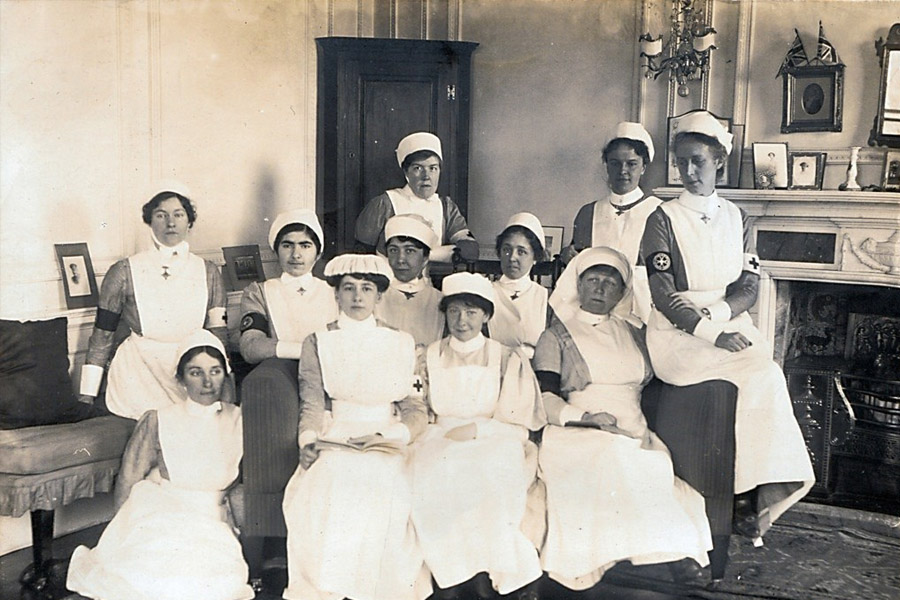
These roles matter because they show a woman engaged with the needs of other women. She was not only preserving family status. She was using it. During the First World War, she served as a Voluntary Aid Detachment nurse at Gledhow Hall. That wartime service gives her biography a sharper light. It tells me she was willing to enter the hard, quiet labor of care when the country needed it most.
Later, she remained active in charitable and civic circles. She helped with the Leeds Ladies’ Association for the Care and Protection of Friendless Girls, supported the Leeds General Infirmary appeal, and served as a governor of Leeds YWCA from February 1935. These were not ornamental titles. They were signs of sustained involvement. She seems to have lived with a steady, practical generosity.
Wealth, Inheritance, and Family Standing
Olive relied on inheritance rather than salary. She and her sister Anne inherited the family business and an interest in another corporation in 1921 after her father’s death. This inheritance connected the Luptons to prosperity, especially the wool trade. Her father’s trust monies later became the Middleton family’s financial underpinning.
One of biography’s secret engines. Not just money here. It’s continuity. Some names endure in archives, properties, foundations, and family memory because of it. Olive helped carry the family riches into the next century, but she did not create it.
Final Years and Legacy Through Descendants
Olive died in Leeds on 27 September 1936 from peritonitis. Her life ended relatively young, but her family line did not. Through Peter Francis Middleton, the family continued into a public future she could not have fully imagined. Her name now appears most often in genealogical and royal family narratives, where it functions like a key hidden in an old drawer. It unlocks a wider inheritance of land, business, civic identity, and social influence.
Yet I think her legacy should not be reduced to what came after her. She was also a woman of early 20th century Leeds, a volunteer in wartime, a committee member, a mother, a daughter, a wife, and a member of a family that carried both privilege and obligation with unusual seriousness.
FAQ
Who was Olive Christiana Lupton?
Olive Christiana Lupton was a Leeds woman born in 1881 who came from the influential Lupton family and later married Richard Noel Middleton. She lived a life shaped by family duty, charitable work, and wartime service.
Who were her parents?
Her parents were Francis Martineau Lupton and Harriet Albina Davis. Both came from established families with deep roots in Leeds society.
Did Olive Christiana Lupton have siblings?
Yes. She had four siblings: Francis Ashford Lupton, Maurice Lupton, Lionel Martineau Lupton, and Anne Muriel Lupton. Her brothers died in the First World War, while her sister Anne became a notable woman in her own right.
Who did Olive Christiana Lupton marry?
She married Richard Noel Middleton on 6 January 1914 in Leeds. He was a solicitor and later became part of the family business world.
How many children did she have?
She had three sons: Christopher Maurice Middleton, Anthony John Middleton, and Peter Francis Middleton.
Why is Olive Christiana Lupton still mentioned today?
She is still mentioned because her descendants include the Middleton family line connected to Catherine, Princess of Wales. Her name also remains important in histories of the Lupton family, Leeds philanthropy, and early 20th century civic life.
What kind of work did she do?
She worked in charitable, civic, and wartime service. She served on girls’ club committees, supported women’s welfare, volunteered as a VAD nurse during the First World War, and later served as a governor of the Leeds YWCA.
What was her financial background?
Her background was tied to family inheritance and industrial wealth, especially the wool business associated with the Lupton family. She and her sister inherited part of that business in 1921 after their father’s death.