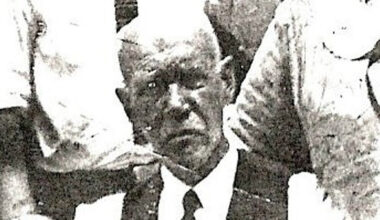
A name that opens onto a larger family story
When I look at the name Eliza Musk, I do not see the flash of a modern celebrity. I see something quieter and, in some ways, more striking. I see a woman whose life sits in the older soil of family history, where dates are sparse, records are uneven, and every surviving detail feels like a small lantern in a long corridor.
Eliza Musk appears to have been born on 3 July 1844 in Exning, Suffolk, England, and she is said to have died in April 1913 in Newmarket, Cambridgeshire, England. Her story does not read like a public biography written in bright ink. It reads like a family portrait half hidden in shadow, where the edges matter as much as the center. Yet that is what makes her intriguing. She stands at an important point in a family line that stretches forward through generations and eventually reaches names known around the world.
I think of her as a hinge in the house of history. Many people walk through that door later, but she is one of the pieces that made the door possible.
Her early life and the world she lived in
Eliza Musk was born into 19th-century rural England, a world of fields, servants, parish records, and forced brief biographies. Her parents are Henry Musk and Charlotte Lane. That alone placed her in a Suffolk family line where surnames, marriages, and inheritances formed a living map.
Her 1861 record as an unmarried servant in an agricultural household provides a clearest picture of her adult life. That detail counts. It seems she lived amid the grind of work, not privilege. Her days were presumably filled with work, obligation, and survival. The Victorian landscape was hard and narrow, but it had an endurance economy. That world seems to fit Eliza.
She has no notable public career. No office, prominent publication, or business empire. Her life feels like a stone at the base of a big family hierarchy. Small but vital.
The family members who define her place in history
Eliza Musk’s family tree is the real stage of her story. Her father is listed as Henry Musk, born in 1799 and dying in 1871. Her mother is Charlotte Lane, born in 1801 and dying in 1885. These dates place Eliza in a family that spans the early and middle 1800s, a period when England itself was changing shape under industrial growth and social strain.
Her paternal grandparents are identified as John Musk, born in 1768 and dying in 1834, and Ann Edwards, born in 1771 and dying in 1861. That means Eliza belonged to a line that reached back into the late Georgian era. The family did not emerge from nowhere. It had roots, and those roots held for generations.
One of the most important names connected to Eliza is Harry Musk, identified as her child. Harry was born in 1863 and later became the bridge between Eliza’s generation and the later Musk line that genealogies connect forward through Walter Henry James Musk, then Errol Musk, and beyond. Harry is the thread that pulls Eliza into a much larger tapestry.
Harry’s own family is described as large, with multiple children recorded in some family trees. Among the names attached to him are Walter Musk, Louis Henry Musk, Harry Eustace Musk, Mabel Musk, Pedro Charles Musk, Joan Musk, William Musk, and Ellen Eliza Musk. When I read those names together, I picture a crowded household, the kind where life is loud, fragile, and ordinary all at once.
Another family name tied to Eliza is William Exning Bridgeman, identified in some records as her spouse. The marriage is placed on 1 November 1884 in Suffolk. That date sits later than the birth of Harry, which makes the family story feel more layered than simple. Family history often works like that. It is not a straight road. It is a lane with turns, gaps, and old stones.
The line continues through Walter Henry James Musk, born in 1917 and described as a grandchild of Eliza. From Walter comes Errol Graham Musk, born in 1946. From there, the family tree continues into the widely recognized modern Musk family branch. This is the strange and powerful part of genealogy. A person with no public fame of her own can still sit near the trunk of a tree whose branches later become famous across the sky.
What I can say about her work and standing
I do not find evidence of a formal career for Eliza Musk in the usual sense. There is no documented profession that defines her the way an author, merchant, or public official would be defined. The clearest occupational note is that 1861 servant listing, which suggests domestic or agricultural labor.
That does not mean her life lacked work. Far from it. It means her work was the kind history often overlooks. It was woven into household routines, childrearing, and the hard logistics of daily life. A woman like Eliza may never have stood on a stage, but her labor still supported the structure around her. She was one of the beams hidden behind the wallpaper.
Financial details are equally thin. There is no reliable public record that makes her wealth visible. She appears to have lived in a world where money was local, family based, and tied to land or service rather than public fortune. That silence tells its own story.
An extended timeline of Eliza Musk
1844: Eliza Musk is born in Exning, Suffolk.
1861: She appears in a record as an unmarried servant in a farming household.
1863: Harry Musk, her son, is born.
1870 to 1873: Family records connect Eliza to twin sons, Ernest and Arthur, who died young.
1884: A marriage record places Eliza with William Exning Bridgeman in Suffolk.
1913: Eliza dies in Newmarket, Cambridgeshire.
1917: Her grandson Walter Henry James Musk is born.
1946: Errol Graham Musk is born, continuing the line.
Later decades: The family line extends toward the better known modern Musk family names.
That timeline is sparse, but it has weight. It is a narrow bridge across more than a century.
Why her story still matters
Eliza Musk’s life inspires me because she shows that not only the loudest make history. Some lives live on through family. Some names are passed along like a palm-protected flame.
Her tale is worn. Not glossy. Wear is evident. But it makes it genuine. Women like Eliza lived practical, local, and mostly undocumented but foundational lives. Families would be hollow without ladies like her.
Her name illustrates how genealogy can change a quiet individual into a source. What started in Suffolk in the 19th century became part of global history. That is a long way to go without being famous.
FAQ
Who was Eliza Musk?
Eliza Musk was a woman born in 1844 in Suffolk, England, who appears in family records as part of the Musk line. Her life seems to have been ordinary in the historical sense, shaped by family, work, and the private demands of 19th century life.
Who were her parents?
Her parents are identified as Henry Musk and Charlotte Lane. Together they place her in a Suffolk family line that reaches back into the late 1700s.
Did Eliza Musk have children?
Yes. Harry Musk is the best documented child connected to her, and family records also attach other children to her line. The broader family tree suggests several descendants, though not every detail is equally firm.
Did she have a career?
No clear public career is documented. The strongest occupational clue is an 1861 record showing her as an unmarried servant in a farming household.
Why is Eliza Musk important?
She matters because she sits near the root of a later family line that eventually connects to well known modern Musk descendants. Her importance is genealogical, historical, and familial rather than public or professional.
Is there much information about her personal life?
Not much. That is part of her story. The record is thin, but the family connections are strong enough to show where she fits in the larger line.
What makes her story interesting?
Her life is a reminder that history often grows from quiet places. Eliza Musk was not a public figure, yet her family line became historically significant. That contrast gives her story its gravity.