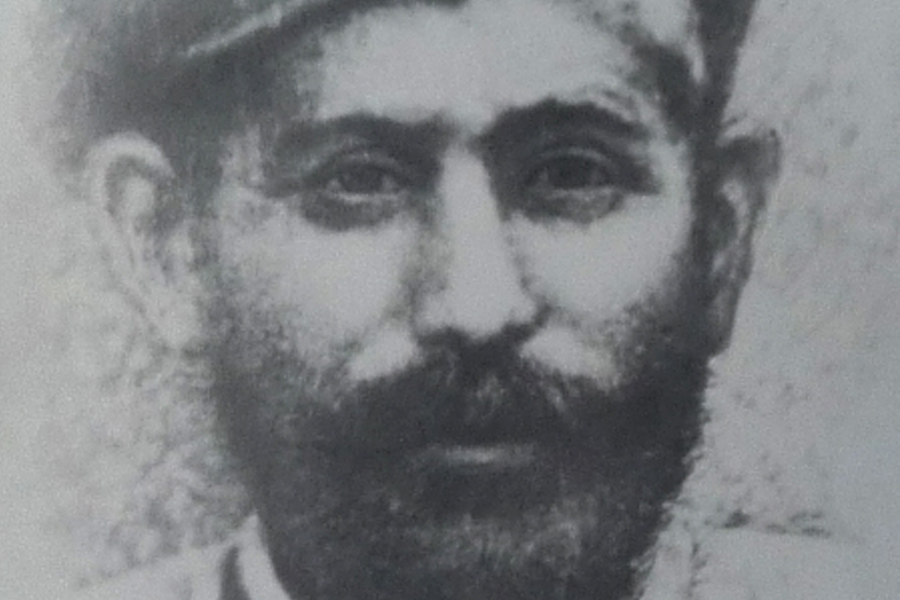
The man before the myth
I often think of Besarion Jughashvili as a small flame in a cold workshop, easy to miss at first glance, yet impossible to ignore once seen. He was born around 1850 in Didi Lilo, in the Tiflis Governorate of the Russian Empire, and he lived most of his life far from power, far from glory, and far from the monuments later built around his family name. He worked with his hands as a shoemaker, a trade that asks for patience, precision, and endurance. In a world of dust, leather, and long hours, he made a life that was modest at first and then slowly unraveled.
Besarion moved to Tiflis when he was young and worked in a shoe factory there. That detail matters to me because it places him inside the rough machinery of late imperial labor, where skill was valuable but stability was fragile. He later moved to Gori and opened his own shoemaking shop. For a time, this seems to have been the peak of his practical success. He employed workers, trained apprentices, and made shoes for Russian soldiers. In a provincial town, that kind of workshop could feel like a kingdom of its own, a place where leather, thread, and metal tools formed the borders of daily life.
Yet his story never stays still. Success bent under pressure. His drinking increased, his home life darkened, and the shop collapsed into decline. He returned to Tiflis and worked in a factory again. In the end, Besarion Jughashvili is remembered less for what he built than for the storm his life left behind.
Besarion Jughashvili and the family circle
The family around Besarion was small, but every member mattered. Each person shaped the emotional weather of the household, and each one left a mark on the family line that history later magnified.
| Family member | Relationship to Besarion Jughashvili | Brief introduction |
|---|---|---|
| Vano Jughashvili | Father | A rural Georgian father from the older generation of the family line, remembered mainly through genealogy and descent. |
| Giorgi Jughashvili | Brother | Besarion’s brother, part of the wider family background that rooted the Jughashvilis in village life. |
| Ekaterine “Keke” Geladze | Wife | A devout Georgian woman, a seamstress, and the central stabilizing force in the household. |
| Mikheil Jughashvili | Son | The first child, born in 1875 and lost in infancy. |
| Giorgi Jughashvili | Son | The second child, born in 1876 and also lost in infancy. |
| Joseph Stalin | Son | The third son, the only child to survive into adulthood, and later the Soviet leader Stalin. |
The family tale revolves around Besarion’s father, Vano Jughashvili, like a buried root. He’s from Besarion’s rustic past. The line illustrates how little authority and inheritance impacted the family. No wealth or fame propelled Besarion. He worked his way up from humble roots.
His brother Giorgi Jughashvili is another familial thread. The human context of Besarion’s early life includes him. Contrary to popular belief, the family was not alone. In Georgian villages, kinship, employment, and survival sometimes overlapped, causing social and economic tensions.
The household’s most significant person after Besarion is his wife Keke Geladze. She was religious, practical, and determined to maintain the family. She was a Gori peasant seamstress. I saw her as a static point in a revolving room. Besarion drank and raged, yet she maintained discipline, faith, and hope that one kid would live. Joseph Stalin was that child.
First-born boys Mikheil and Giorgi perished in infancy. Their short lives haunt family history. Besarion and Keke must have been strained by these early deaths in a labor-based family. Two burials before parenthood can make a home a pressure chamber. Such deaths are not footnotes. The family’s emotional architecture includes them.
Only the third son, Joseph Stalin (Ioseb Besarionis dze Jughashvili), survived maturity. His historical prominence brought Besarion’s life to light. Besarion is well known for being Stalin’s ancestor. That immortality is odd. Not seeking it, he could not have imagined it.
Work, money, and the shape of daily life
Besarion’s career was not glamorous, but it was real, physical, and commercially grounded. He was a shoemaker. He worked in a factory, then ran his own shop, then returned to wage labor after his domestic and financial life fell apart. That arc tells me more than any formal title could.
His shop in Gori was the strongest chapter of his working life. It employed several workers and apprentices, which means he had, for a time, crossed from mere labor into small enterprise. Shoes were not just objects in that world. They were survival. They carried soldiers, travelers, workers, and children through mud, heat, and winter. To make shoes was to shape the means of movement itself.
But the money never seems to have stayed long. The shop failed. The family lost its stability. The household moved from relative comfort into renting, displacement, and anxiety. Alcohol made the decline steeper. By the time Besarion returned to Tiflis, the story had changed from one of ambition to one of damage control. His working life became a retreat instead of a climb.
He did not leave behind a fortune, a patent, or a major enterprise. His achievement was narrower and more human. He learned a trade, opened a business, supported a family for a time, and worked across two of the most important labor settings of the age, the factory and the workshop. That is not a small thing. It is the kind of life that holds society together while history looks elsewhere.
Violence, distance, and the breaking of a home
Conversations on Besarion Jughashvili generally focus on violence. That’s reasonable. The tales describe a drunken, angry father who frightened his family. His friendship with Keke deteriorated. His relationship with young Joseph broke. He left home and returned to Tiflis, isolating himself from family life.
I find this aspect unchangeable. His instability devastated the family emotionally. The home that should have been safe became a scene of anxiety and tension. That kind of domestic disintegration affects generations. Even after power and politics seemed to erase it, the next generation carried that early injury.
I think it’s very easy to generalize Besarion as cruel. He was an artisan, father, husband, and Georgian trying to survive in a tough economy. One material did not define his life. It was made of ability, ambition, disappointment, shame, and failure.
A family record that stretches beyond the grave
Besarion died in 1909 in Tbilisi. The exact burial story has been debated, and even that tells us something about the way his memory survived, partly in documents and partly in rumor. He never became a public figure in his own right, but the family line that came after him made his name travel much farther than his own life ever did.
His descendants and extended family, through Stalin, include a far larger constellation of names, but Besarion remains the origin point. He is the hinge on which the family’s history turns. Without him, there is no household in Gori, no early domestic pressure, no fatherly shadow in Stalin’s childhood.
FAQ
Who was Besarion Jughashvili?
Besarion Jughashvili was a Georgian shoemaker, the father of Joseph Stalin, and a man whose life moved from modest trade to family collapse.
What did Besarion Jughashvili do for work?
He worked in a shoe factory, opened his own shoemaking shop in Gori, employed workers and apprentices, and later returned to factory labor in Tiflis.
Who was his wife?
His wife was Ekaterine Geladze, usually called Keke. She was a seamstress, deeply religious, and the main stabilizing force in the household.
How many children did Besarion Jughashvili have?
He had three sons. The first two, Mikheil and Giorgi, died in infancy. The third, Joseph Stalin, survived to adulthood.
Why is Besarion Jughashvili remembered today?
He is remembered because he was Stalin’s father, but also because his life reveals the private, difficult world behind a famous political lineage.
What kind of man was he?
He appears as a skilled but troubled craftsman, a man with practical talent, unstable habits, and a family life that broke under pressure.
Did Besarion Jughashvili achieve anything important?
Yes. He built a working shoemaking business, supported a household for a time, and lived a laboring life that reflected the realities of his era.