A life shaped by salt, family, and the sea
I see Patrizia Maiorca as a woman whose story begins before her public name ever appeared in reports, event programs, or conservation campaigns. She was born in 1958 in Ortigia, Syracuse, in a house close to the water, and that detail feels important. Her life did not simply touch the sea. It grew out of it like a branch from an old, stubborn tree. She became known first as a freediver, then as a marine advocate, and later as a public voice for environmental protection and the legacy of her father, Enzo Maiorca.
Her early years were tied to the sea in the most natural way possible. She trained with her sister Rossana, and what began as youthful curiosity became serious athletic discipline. By the age of 20, she had already reached 35 meters in constant weight freediving. One year later, she improved to 40 meters. By 1987, she had reached 70 meters in variable weight, a mark that placed her among the notable figures of the sport. I read that progression as a ladder built underwater, rung by rung, in silence and pressure.
The Maiorca family, public and private
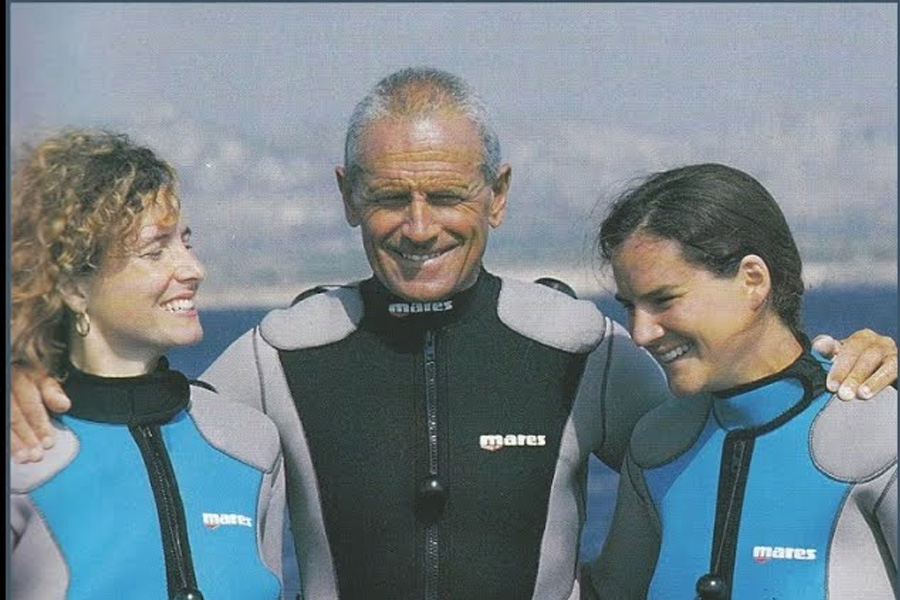
Even after leaving the Maiorca family, Patrizia’s story revolves around them. Her father was Enzo Maiorca, the famous Italian freediver who immortalized apnea. Her mother was Maria Gibiino. Rossana Maiorca, Patrizia’s sister, described her family’s public diving life.
Enzo Maiorca tops this family story like a beacon. As a father, symbol, standard, and shadow, he affected how the outside world saw the family. Patrizia inherited more than a famous surname. She inherited a famous marine relationship.
Patrizia’s sister Rossana Maiorca greatly influenced her early life. They shared more than blood. Training, memory, and a shared sense of growing up in a family where the ocean was teacher and stage bound them. Rossana died in 2005, but Patrizia still mentions her.
Family life was also developed by Patrizia. It is unclear who her spouse and two children are, although public records suggest they exist. My preference is to maintain that border. Some lives are fully revealed, while others are partially hidden. Since Patrizia’s public persona is related to employment, record setting, and conservation rather than private exposure, the curtain is especially considerate.
From athlete to guardian of the sea
Patrizia Maiorca did not remain only a freediver. She turned her relationship with water into responsibility. That shift matters. Many athletes leave their sport behind when the spotlight fades, but Patrizia seems to have done the opposite. She carried the discipline of apnea into environmental defense.
She became closely connected to the Area Marina Protetta del Plemmirio, where she served as president of the consortium. That role placed her in a position of stewardship rather than performance. Freediving is about holding still inside the body. Conservation is about holding the line outside it. In her case, both roles seem to belong to the same person.
Her public comments and appearances show a consistent message. The sea is not decoration. It is not a backdrop. It is a living system that needs protection, rules, and human attention. She has spoken about biodiversity, biological closures, marine balance, and the need to treat the sea as a place of shared survival. I hear a kind of moral clarity in that stance. She does not speak like someone describing scenery. She speaks like someone guarding a home.
She has also been involved with Sea Shepherd as part of its advisory structure, and she has appeared at public events that combine marine awareness, cultural memory, and activism. Her work moves between institutional leadership and symbolic presence, which gives her profile a layered shape. She is not only a former champion. She is also a custodian.
Records, recognition, and the discipline of depth
Patrizia’s athletic life deserves its own attention because it laid the foundation for everything else. Freediving is a sport of precision, patience, and nerve. It strips away noise. It asks the athlete to become small, calm, and exact. Patrizia met that challenge with unusual success.
Her 70 meter variable weight record in 1987 stands out because it reflects both technical skill and courage. Before that, her earlier achievements at 35 meters and 40 meters show a steady rise, not a sudden leap. That pattern tells me something about her character. She was not built for spectacle alone. She was built for endurance.
She has also accumulated public recognition far beyond competitive rankings. Later reports describe her as having 12 world records overall, and her name has continued to surface in marine honors, cultural events, and commemorations tied to Enzo Maiorca’s legacy. She has become, in a sense, part athlete, part witness, part memory keeper. Those roles can overlap beautifully when a person’s life is bound to an element as vast as the sea.
Books, cultural memory, and public presence
Patrizia Maiorca appears in literature and culture. In 2022, she composed Aria sotto il mare’s preface and contributed to Pietro Marchese’s volume. It exposes another side of her public persona. Her activities go beyond the field and events. She also shapes page meaning.
In recent years, she has attended public events. At conferences and projects in Sicily and beyond, she has spoken, been honored, and represented sea protection. Her name featured in heritage, conservation, and recognition contexts in 2024 and 2025. She participated in Enzo Maiorca and marine culture activities in 2026. Her extensive and active history offers her profile drive, not nostalgia.
Family members in focus
Patrizia’s family story can be read as a constellation.
Enzo Maiorca was the central star, the father whose fame shaped the family’s public image and whose relationship with the sea became historic. Maria Gibiino was the mother, less publicly documented but essential to the family structure. Rossana Maiorca was the sister and companion in the diving world, sharing in the family’s athletic and emotional currents. Patrizia herself stands between memory and action, carrying family legacy while creating her own.
Even the parts of her family life that are not fully public help define her. The known names matter, but so does the restraint around the unknown names of her husband and children. That privacy does not weaken the story. It gives it texture. Not every important relationship needs to be displayed under glass to be real.
FAQ
Who is Patrizia Maiorca?
Patrizia Maiorca is an Italian freediver, marine conservation advocate, and public figure from Ortigia, Syracuse. She is also the daughter of Enzo Maiorca and Maria Gibiino, and the sister of Rossana Maiorca.
What is Patrizia Maiorca known for?
She is known for her freediving records, including a 70 meter variable weight achievement in 1987, and for her later work in marine protection, especially connected to the Plemmirio marine reserve.
Who are the family members connected to Patrizia Maiorca?
Her publicly identified family members include her father Enzo Maiorca, her mother Maria Gibiino, and her sister Rossana Maiorca. Public material also indicates that she has a husband and two children, though their names are not reliably published.
Did Patrizia Maiorca follow her father’s path?
Yes, but not in a simple copy of it. Enzo Maiorca was a legendary freediver, and Patrizia inherited both the name and the sea connection. She built her own identity through competition, environmental work, and public leadership.
Is Patrizia Maiorca still publicly active?
Yes. Recent appearances and mentions show her involved in marine, cultural, and commemorative events, especially those tied to Sicily, the sea, and Enzo Maiorca’s legacy.