A woman born into old wealth and newer American money
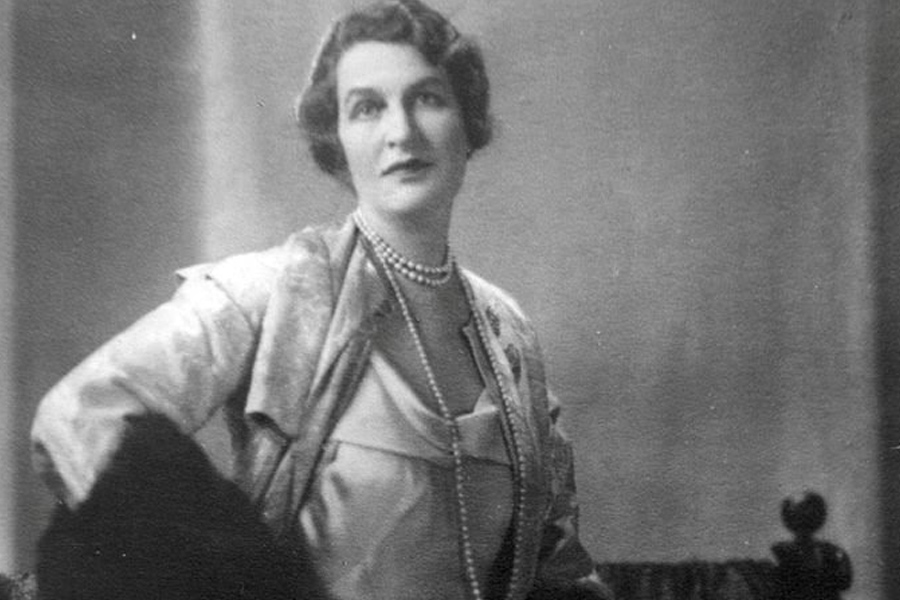
I think of Marina Torlonia Di Civitella-cesi as a figure standing at the meeting point of two powerful currents. One current came from the ancient Roman nobility, polished by titles, ceremony, and inherited prestige. The other came from American wealth, bold and modern, carried across the Atlantic in the early 20th century. Marina was born in Rome on 22 October 1916, and from the first moment her life seemed arranged like a formal garden, with each path leading to another branch of rank, marriage, and family memory.
Her father was Marino Torlonia, 4th Prince of Civitella-Cesi, and her mother was Mary Elsie Moore, an American heiress who became known as the “Dollar Duchess.” That pairing alone tells a complete story. On one side was the old house of Torlonia, a family associated with Vatican finance and aristocratic influence. On the other was an American fortune built in a nation where money could become pedigree in a single generation. Marina grew up where those two worlds overlapped, and she inherited both the shine and the pressure that came with them.
The Torlonia family, a house with deep roots
The Torlonia name matters. This surname has a rich history. Through Vatican financial assistance, the family became a prominent Roman noble house. That line included Marina’s father Marino and her brother Alessandro, the 5th Prince of Civitella-Cesi. Alessandro married Infanta Beatriz of Spain, bringing the family closer to European monarchy. The Torlonia web became regal and seemed like a bridge over old Europe after that marriage.
Marina had sisters, and each lends a unique accent to the family portrait. The oldest, 1909-born Olimpia, died young in 1924. Marina’s story includes her absence since aristocratic families frequently build from sorrow as much as ceremony. Cristina, another sister, is quieter but nonetheless significant. Despite one sister dying young and another being unknown, the family remained visible, enduring, and full of expectation.
Mary Elsie Moore and the American thread
Mary Elsie Moore gave Marina something unusual: a transatlantic inheritance that was social as much as financial. She was not a Roman noblewoman by birth. She came from American wealth, and in marrying Marino Torlonia she stepped into a world of titles, palaces, and old protocol. That move changed the texture of the family forever. Marina and her siblings were raised with both Roman aristocratic identity and American legacy folded into the same fabric.
I find that blend especially important because it explains Marina’s public image later in life. She was never merely a society name. She was a living emblem of two elite systems speaking to each other. Her mother’s side gave her a modern, international feel. Her father’s side gave her the carved stone frame of tradition. Together they made her the kind of person who could appear in society columns, charity events, and family genealogies with equal ease.
Debutante years and charitable life
Marina’s early adult years were marked by society life and charity work. She made her New York debut in February 1934, a classic passage into public womanhood among the elite. That debut was not just a social introduction. It was a declaration that she had become visible, eligible, and expected to represent her family with poise.
During the 1930s, she took part in charitable activities tied to hospitals, welfare groups, women’s organizations, and children’s causes. Her public role was elegant but purposeful. I picture it as the soft glow of a chandelier rather than the blaze of a spotlight. She moved through the social world in a way that combined glamour with obligation. She was also remembered in association with artistic circles, including a wax portrait made of her in 1935. That detail matters because it captures the way others saw her, not only as a woman of wealth, but as a face worth preserving.
Frank Shields, marriage, and the American branch of the family
Her first marriage linked Marina to another powerful family. Her husband was American tennis player and actor Frank Shields, whom she married in 1940. Their marriage united Roman aristocracy, American sports, notoriety, and ambition. The merger felt cinematic, like two social universes sharing a stage.
Marina’s tale continued via their children. Their son Francis Alexander Shields was a Revlon executive and businessman. He married twice and fathered Brooke Shields, whose prominence revived Marina’s ancestry. Their daughter Marina Shields continued the name. Francis Alexander made Marina the grandmother of Brooke, Marina Shields Purcell, Olympia Bishop, and Christina Torlonia Shields, and later her great-grandmother.
This chain illustrates how one woman’s life may ripple like light on water. Marina may have lived in titles and exclusive circles, but her family line entered modern public life through business, education, fashion, and entertainment.
Edward W. Slater and the later chapter of her life
After her divorce from Frank Shields, Marina married Edward W. Slater in 1950. He was an architect, and the match suggests a shift in atmosphere. If her first marriage linked her to sport and fame, the second connected her to design, structure, and practical creation. In 1955 they had a son, Edward Torlonia Slater. That made Marina a mother across two marriages and the center point of a family that expanded in several directions at once.
The later years of her life were cut short by tragedy. She died on 15 September 1960 in a car accident in Piacenza, shortly after attending the wedding of her nephew Marco Torlonia. Her death at 43 gave her life a sudden, unfinished shape. It is the kind of ending that leaves a bright line behind it, as if a candle had burned quickly and left the room half lit.
Family members at a glance
| Family member | Relationship to Marina | Notable details |
|---|---|---|
| Marino Torlonia | Father | 4th Prince of Civitella-Cesi, Roman noble line |
| Mary Elsie Moore | Mother | American heiress, brought American wealth into the family |
| Olimpia Torlonia | Sister | Eldest sister, died young |
| Alessandro Torlonia | Brother | Became 5th Prince of Civitella-Cesi |
| Cristina Torlonia | Sister | Less public, part of the same noble household |
| Francis Xavier Shields | First husband | Tennis player and actor |
| Francis Alexander Shields | Son | Businessman, father of Brooke Shields |
| Marina Shields | Daughter | Marina’s daughter from her first marriage |
| Edward W. Slater | Second husband | Architect |
| Edward Torlonia Slater | Son | Child of Marina’s second marriage |
Legacy in the family tree
Marina is remembered for her bloodline, memory, and continuity, not her accomplishments. She links the historic Torlonia nobility to a current family name known beyond aristocracy. Brooke Shields popularized her ancestry. The Torlonia line connected her to Roman nobles. Through Mary Elsie Moore, she framed American riches.
Her odd blend makes her memorable. She was not a politician, industrialist, or public figure. She was a subtler, possibly more durable woman who joined dynasties. Marina resembled a perfectly cut jewel in two metals. Roman, ancient, and formal metal. The American was smart and restless. Her family members individually embodied that design, creating a beautiful house portrait.
FAQ
Who was Marina Torlonia Di Civitella-cesi?
Marina Torlonia Di Civitella-cesi was an Italian-American aristocrat, socialite, and charity worker born in Rome in 1916. She belonged to the Torlonia noble family through her father and to a wealthy American family through her mother.
Who were her parents?
Her parents were Marino Torlonia, 4th Prince of Civitella-Cesi, and Mary Elsie Moore.
How many times was she married?
She was married twice. Her first husband was Francis Xavier Shields, and her second husband was Edward W. Slater.
Did Marina have children?
Yes. She had children from both marriages, including Francis Alexander Shields, Marina Shields, and Edward Torlonia Slater.
How is Marina connected to Brooke Shields?
Marina was Brooke Shields’s grandmother through her son Francis Alexander Shields.
What was Marina known for during her life?
She was known for society events, her New York debut in 1934, charity work, and her place within two prominent family lines, the Torlonias and the Moores.