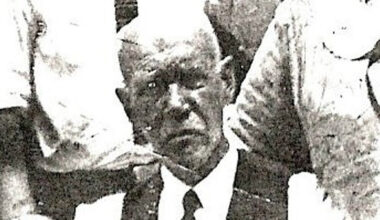
Early Life and Background
I saw Philo Barnum as a man from early New England, where family names mattered, work was consistent, and a person could work numerous trades without getting great. Born in Danbury, Connecticut, on April 4, 1778, his narrative is part of the quieter side of American history, when people built lives with their hands, judgment, and perseverance.
Philo was related to Ephraim Barnum and Rachel Starr. His heritage connected him to ancient Connecticut families like the Starr and Taylor families, giving his household a long local history before his children were born. His life feels like a wooden span across a frigid creek, transporting old family memories into the age that made his son famous.
The records differ on his death, but the fundamental reality is consistent. After a rough career and scant wealth, Philo Barnum died. His wealth was forgotten. He was regarded as a father, provider, and the founder of a multi-branch family.
Marriage, Household, and Children
Philo Barnum’s family life was shaped by two marriages, and together those marriages produced ten children. That large household made his home a crowded, living workshop of voices, chores, and responsibilities.
His first wife was Phebe “Polly” Fairchild Barnum. Their marriage appears to have begun around 1799. From that union came five children. The first was Rana Barnum Benedict, born in 1800. Next came Almon Barnum in 1801. Minerva Barnum Drew followed in 1804. Then came Philo Fairchild Barnum in 1806, and finally Mary H. Barnum in 1808, who died in infancy.
After Polly’s death, Philo married Irena Taylor on 14 December 1808. That second marriage added another five children to the household. Their first child was Phineas Taylor Barnum, born in 1810, the son who would later become widely known as P. T. Barnum. Then came Eder Barnum in 1813, Mary Barnum in 1815, Cordelia Barnum in 1820, and Almira Barnum in 1823.
I think of this family not as a neat portrait but as a living scene. Children arriving in waves. Loss arriving too. A father moving from one trade to another. A mother keeping the household together. Each child added weight and meaning to the family line, like rings in a tree trunk marking years of pressure and growth.
Philo Barnum and His Work
Philo Barnum worked in several roles over the course of his life. He was a farmer, tailor, tavern keeper, storekeeper, livery stable owner, grocer, and express operator according to the accounts tied to his life. That mix tells me he was a practical man who followed opportunity where he found it.
He was not the kind of businessman who left behind a large empire. His work was local, steady, and often uncertain. A tavern needed customers. A store needed inventory. A stable needed horses, feed, and labor. An express business depended on movement and trust. Each occupation was a thread, and together they formed a plain but sturdy cloth.
The financial record attached to Philo is just as telling. He is often described as having had little profit and an insolvent estate. That means he worked, but wealth never settled permanently in his hands. The picture is not of failure in a simple sense. It is the picture of a man living close to the edge, where every earned coin mattered and every setback could tilt the household.
His son P. T. Barnum later described the family’s hardship in blunt terms. The father’s work did not make the family secure, and the burden of that instability fell heavily on the home. Still, hardship can be a school, and the lessons it gave to young Phineas were likely severe but useful. In that sense, Philo’s life became part of the machinery that shaped a future showman.
The Family Web Around Philo Barnum
I learn more about Philo by looking at his family.
His parents were Rachel Starr and Ephraim Barnum. He joins elder Barnum, Starr, and Taylor lines in a colonial Connecticut family network. These names were more than labels. Family identity stretched over land, marriage, inheritance, and local repute when they were anchors.
He had five children with Phebe “Polly” Fairchild Barnum, his first wife. Her death in 1808 likely altered the home routine. Such a death does not erase a person. Weather changes within a home.
Irena Taylor Barnum, his second wife, had the subsequent children and aided the family following Polly’s death. She links Philo’s family to the Taylor line and the branch of genealogy that would be replicated in grandchildren’s names.
Next, his children added to the family story:
Rana Barnum Benedict, the oldest, married and started a new family.
As an adult, Almon Barnum preserved the Barnum name in records.
Through marriage, Minerva Barnum Drew connected the family to the Drews.
Philo Fairchild Barnum took his father’s surname and his mother’s family name as a little but important tribute.
Early death of Mary H. Barnum is part of the family story.
P. T. Barnum was the most famous youngster, but I don’t think that makes him more important. Just makes him easier to recall.
Eder, Mary, Cordelia, and Almira Barnum completed the younger family.
Caroline Cornelia Barnum Thompson, Helen Maria Barnum Buchtel, Frances Irena Barnum, and Pauline Taylor Barnum Seeley were P. T. Barnum’s granddaughters. Philo’s family spread out like oak branches, each with a different shape but the same base.
What Philo Barnum Represents
I do not see Philo Barnum as a famous man in the modern sense. I see him as a foundation. He was the kind of man history often passes over unless he happens to stand near someone more loudly remembered. Yet his life mattered in the most ordinary and powerful way. He fathered a large family. He worked many jobs. He carried financial strain. He helped shape the household from which P. T. Barnum emerged.
His life is a reminder that history is not built only by the loudest names. It is also built by the people who keep a family moving forward when the roof leaks, when the money runs thin, when children keep arriving, and when tomorrow still demands breakfast.
FAQ
Who was Philo Barnum?
Philo Barnum was a Connecticut-born family man and local tradesman born on 4 April 1778. He is best known today as the father of P. T. Barnum, but his own life included farming, tailoring, tavern keeping, store work, and other small business efforts.
How many children did Philo Barnum have?
He had ten children in total. Five were born to his first wife, Phebe “Polly” Fairchild Barnum, and five were born to his second wife, Irena Taylor Barnum.
Who were Philo Barnum’s wives?
His first wife was Phebe “Polly” Fairchild Barnum. After her death, he married Irena Taylor Barnum on 14 December 1808.
Was P. T. Barnum Philo Barnum’s son?
Yes. Phineas Taylor Barnum, later known as P. T. Barnum, was one of Philo Barnum’s sons and the most famous member of the family.
What kind of work did Philo Barnum do?
He worked in several local occupations, including farming, tailoring, tavern keeping, storekeeping, operating a livery stable, grocery work, and running an express business.
Did Philo Barnum leave behind great wealth?
No. The family record points to limited financial success and an insolvent estate. His life appears to have been one of persistent work without lasting wealth.
Who were Philo Barnum’s parents?
His parents were Ephraim Barnum and Rachel Starr.
Who were some of Philo Barnum’s children?
His children included Rana Barnum Benedict, Almon Barnum, Minerva Barnum Drew, Philo Fairchild Barnum, Mary H. Barnum, P. T. Barnum, Eder Barnum, Mary Barnum, Cordelia Barnum, and Almira Barnum.